

Ask ten seasoned players what separates a profitable session from a donation to the house, and you'll get ten different answers. Ask the math, and the answer gets uncomfortable: for most people, nothing separates them at all. They're playing the same games with the same odds, just experiencing different slices of variance. The genuine gap between players who last and players who burn out isn't luck or a secret strategy — it's understanding how the machinery actually works before you sit down.
Let's dig into the mechanics that matter, whether you're spinning slots at 3 a.m., grinding a poker table, or sweating a parlay on a Sunday afternoon.
The House Edge Isn't a Suggestion — It's a Tax
Every casino game carries a built-in mathematical advantage for the operator. That's not a conspiracy; it's the business model. What matters is how big that edge is, because it determines how long your bankroll survives.
Consider the spread across popular games: chơi rikvip is a solid starting point for anyone new to this.
- Blackjack (basic strategy): roughly 0.5% house edge — one of the best bets on the floor
- Baccarat (banker bet): about 1.06%
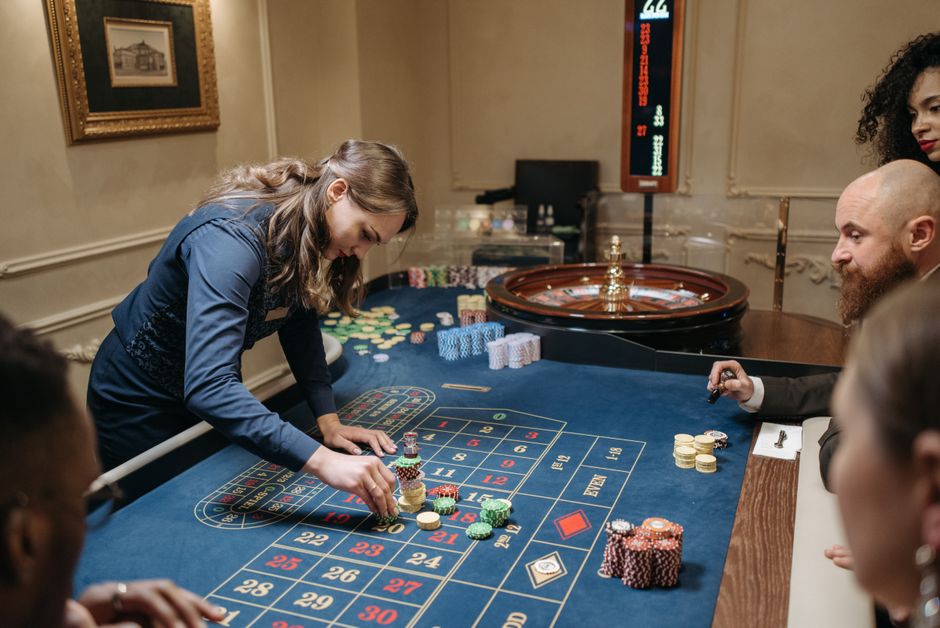
- European roulette: 2.7%
- American roulette: 5.26% — the extra double-zero pocket nearly doubles the tax
- Slots: typically 2% to 10%, depending on the machine and jurisdiction
- Keno: often 25% or worse
This is why choosing what you play is more important than how you play it. A skilled blackjack player using basic strategy at a 0.5% edge will lose far less over 1,000 hands than someone playing keno at 25%. Same bankroll, wildly different outcomes.
Here's a concrete example. You sit down with $500 and play 500 hands of blackjack at $5 per hand. Expected loss: about $12.50. Now play 500 spins on a slot with a 5% edge at $1 per spin: expected loss is $25. Same time investment, double the bleed. Over a year of weekly sessions, those differences compound into hundreds or thousands of dollars.
Volatility: The Variable Nobody Talks About
House edge tells you the direction. Volatility tells you the ride. Two slots can have identical RTP (return to player) percentages but feel completely different.
A low-volatility slot pays small amounts frequently. You'll grind along, rarely hitting big, rarely busting fast. A high-volatility slot like a Megaways title might pay nothing for 50 spins, then drop a 500x multiplier. Neither is better — but your bankroll size and temperament determine which suits you.
Practical rule: if you're playing with a $100 bankroll, high-volatility slots are a coin flip on whether you even survive long enough to see the feature. If you've got $500 and patience, high volatility can deliver the kind of session you actually remember. Poker tournaments work the same way — low buy-in turbo events are high variance, deep-stack slow structures reward skill over luck.
Slots: Reading the Fine Print That Matters
Slot machines aren't equal, and the differences aren't always visible. Here's what actually matters:
- RTP percentage. Legally published in most regulated markets. A 96% RTP slot returns $96 for every $100 wagered over millions of spins. A 92% slot returns $92. That 4% gap is enormous over time.
- Max win potential. Some slots cap at 500x your bet; others advertise 50,000x. Higher max win usually means lower hit frequency.
- Bonus buy features. Buying a bonus round for 100x your bet can be tempting, but you're paying a premium for variance reduction. The RTP on bonus buys is often slightly lower than spinning naturally.
- Jackpot contribution. Progressive slots divert a slice of every bet to the jackpot. That's fine if you're chasing it, but it lowers the base game RTP.
A useful tip: regulated operators in the UK and Malta must publish RTP, and third-party sites track it. Spend five minutes checking before you commit to a machine you'll play for hours.
Betting: Where Discipline Beats Knowledge
Sports betting is the one vertical where genuine edge is possible — but only for a tiny minority. Bookmakers build in 4% to 8% margins on most markets, and they adjust lines based on public money, not just probability.
The players who grind out profits do three things consistently:
- They shop lines across multiple books, because a half-point difference in NFL spreads or a 0.1 change in decimal odds flips long-term profitability
- They specialize in one or two leagues where they have deep knowledge, not 12 sports at surface level
- They track every bet in a spreadsheet — stake, odds, closing line value, result
Closing line value is the single best predictor of long-term betting skill. If you consistently bet better numbers than the closing line, you have an edge, even if you lose that particular week.
Poker: The One Game Where Skill Actually Compounds
Poker is unique in the iGaming landscape because you're not playing the house — you're playing other people, and the house takes a rake. This means a skilled player can achieve positive expected value over time, unlike slots or roulette.
But here's what most recreational players miss: in the modern online ecosystem, the average opponent at low stakes is dramatically better than they were fifteen years ago. Solver software and training sites have raised the floor. The edge now lives in:
- Exploiting specific player types rather than playing GTO (game theory optimal) perfectly
- Game selection — finding soft tables is worth more than any single strategy adjustment
- Bankroll management: never risking more than 5% of your roll in a single cash game buy-in, or 2% on a tournament
A winning player at 5bb/100 hands (big blinds per 100 hands) is crushing it. That's roughly $5 per 100 hands at a $1/$2 table. Over 40,000 hands a year — a realistic volume for a serious hobbyist — that's $2,000 before rake. Respectable, but it shows why poker is a grind, not a lottery ticket.
The Only Strategy That Actually Works
If there's one unifying principle across slots, betting, and poker, it's this: survive long enough for variance to even out, and only play games where the math doesn't slaughter you.
That means picking low-edge casino games, understanding slot volatility before you spin, shopping lines before you bet, and treating poker as a skill game with a long learning curve rather than a get-rich-quick scheme. It also means setting loss limits before you play — not after you're down three buy-ins and chasing.
None of this guarantees you'll win. The house always has its edge, and bad luck will find you eventually. But it changes the nature of the experience entirely. Instead of hoping for a miracle, you're making calculated decisions with money you can afford to lose, on games where the math gives you the fairest possible shot. That's not gambling advice — that's just how the numbers work. And in an industry built on numbers, ignoring them is the most expensive mistake of all.


Comments